Heritage
SOFO review: Lee Miller - A Woman at War
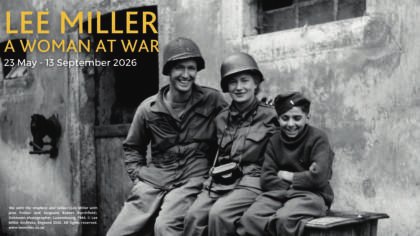
Review of Lee Miller: A Woman at War
Whether you’ve an interest in the history of the Second World War, in war photography and journalism, in women and art, or the history of women in wartime, SOFO, the Soldiers of Oxfordshire Museum in Woodstock, has a really wonderful exhibition for you, exploring the wartime work of Elizabeth ‘Lee’ Miller, Lady Penrose (1907-77). Don’t miss it!
Lee’s first career was actually as a model but she had been taught photography by her father, a keen amateur photographer, and photojournalism soon became her chosen profession. She left the USA for Paris in 1929 where she immersed herself in its modern art, and also embarked on an important if stormy relationship with Man Ray, the celebrated photographer and surrealist artist. As part of Man Ray’s artistic circle, which included Picasso and Cocteau, she acquired the perceptive and interpretative eye of an artist, seeing the remarkable in the everyday. It was in Paris in 1937 that she met, and then married, Roland Penrose, the British art critic. Her life story was turned into a film (‘Kate’ 2023, starring Kate Winslett).
When German bombs blitzed London in 1940, Lee became an official war photojournalist for Vogue Magazine (not normally associated with the brutality of war) and this exhibition at SOFO is the product of a carefully curated selection of prints from an archive of 60,000 negatives and 20,000 photos, stored in the attic of the Penrose’s home in Sussex and discovered on Lee’s death by her two children.
Lee’s war saw her accredited as a photojournalist to the US forces for Condé Nast. As a woman, she was forbidden to work directly in combat zones but she did get caught up in the Battle for St Malo in 1944, and recorded the bitter warfighting there. The photos she took behind the lines, as the US and UK forces fought their way into Hitler’s Reich, are as stark as they are moving and are a unique and beautiful set of images of this, the first ‘total war’ in history, not least as it affected Europe’s women and children.
Lee was one of the very first people to take photos of the liberated Nazi concentration camps of Dachau and Buchenwald and write about the horrors she saw: she begged an initially reluctant Vogue to publish her photostory (‘I implore you to believe this is true’, she wrote of ‘the sight of blue and white tatters shrouding the bestial deaths of starved and maimed men and women’ and (correctly) realised she was providing lasting proof of what the Germans had done so that they and their ilk could never deny it.
But there are uplifting photos here too: the bright face of a young woman released from the Gestapo torture gaol in Cologne, the focused look on the face of a Polish female RAF Spitfire pilot, brave nurses in field and military hospitals, including some at the Churchill Hospital in Oxford (where wounded service personnel were treated) as well as haunting images of shamed women with shaven heads, paraded in Paris for ‘associating’ with Germans and nurses.
SOFO is also displaying some of Lee’s world-famous keynote shots: there’s one of Lee in the bathtub of Hitler’s Munich flat in the Prinzregentenstrasse, defiantly ‘washing the dirt of Dachau off her body’, -and just see Lee lolling on Eva Braun’s bed in the pretty suburban villa the Fuehrer had gifted his future wife. It’s as if Lee were saying ‘now look who won in the end’.