Nature
Nature Matters
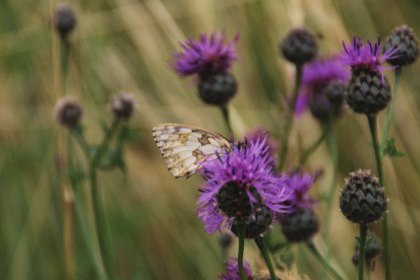
July holds the warmth and ease of high summer, a time when the countryside feels open, generous, and full of steady activity. Vegetation is at its fullest now, with tall grasses rippling in the breeze and wildflowers creating bright, shifting mosaics across meadows and banks.
Marbled white butterfly on Knapweed - photograph by Ulrich Knoll Knapweed, scabious, meadowsweet, and thistles remain prominent, and they are joined by yarrow, lady’s bedstraw, betony, wild marjoram, and patches of self-heal scattered through shorter turf. Their flowers draw in a wide range of insects - bees working methodically, hoverflies darting with sharp precision, and beetles clambering over petals in quiet determination. Along hedgerows and the edges of woodland, bramble flowers offer rich nectar, while shady spots hold the cool minty scent of water mint near damp ground and streams.
Butterflies reach their greatest diversity. Meadow browns, gatekeepers, ringlets, red admirals, and small tortoiseshells remain abundant, but marbled whites drift over grassland, while commas, peacocks, and painted ladies bask on warm paths. Over ponds and slow streams, banded demoiselles flicker iridescent green and blue, and broad-bodied chasers patrol in looping circuits, their wings catching the light.
Birdsong has quietened, but the countryside is far from silent. Yellowhammers call their familiar “little-bit-of-bread-and-no-cheese” phrases from hedgerow tops, and goldfinches gather in loose groups to feed on ripening seed heads. Mixed family groups of blue tits, great tits, and long-tailed tits move through thickets and hedges, and possibly our gardens - their soft calls giving them away long before they are seen.
Mammals make the most of long, warm evenings. Brown hares move through fields with easy, measured bounds. Roe deer browse quietly along the margins of woodland, often appearing suddenly and pausing in alert stillness. Field voles and bank voles dart between tussocks, following narrow, well-worn runs.
As dusk falls, bats emerge to forage, tracing confident paths along hedges, meadows, and waterways. Near streams and rivers, the life of the water continues at its own pace. Small fish rise to drifting insects, and water boatmen, pond skaters, and the occasional diving beetle animate the surface. Dragonflies skim low over the water, and on warm evenings their silhouettes appear briefly against the reflections.
Seed heads develop across meadows, the first sign of the gradual shift towards late summer. Blackberries begin to colour on sunny banks, offering early rewards to birds, mammals, and any passer-by who notices their quiet ripening.
July carries an assured, unhurried character. It is a month that encourages steady wandering, a warm appreciation of the varied life around us, and a sense of ease in the countryside at one of its richest points in the year.